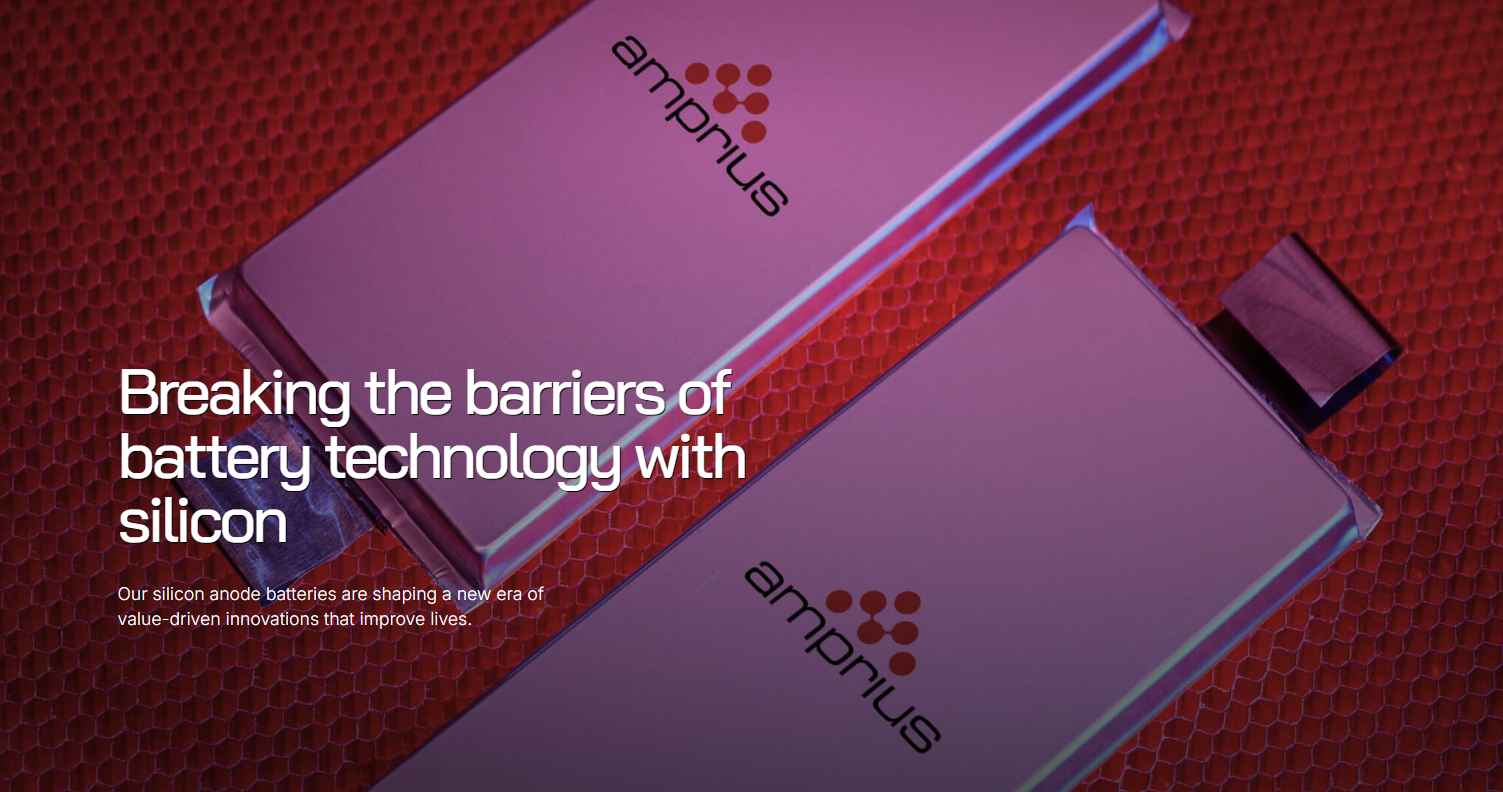
The global energy landscape is currently witnessing a tectonic shift, moving away from the era of incremental improvements toward a decade of radical hardware disruption. At the epicenter of this transformation is Amprius Technologies (AMPX), a company that has effectively transitioned from a high-tech laboratory curiosity into a commercial powerhouse. As a former systems engineer turned stock analyst, I look for “inflection points”—those rare moments where a company’s technical superiority finally aligns with manufacturing scalability and fiscal discipline. For Amprius, that moment has arrived. With the successful commercialization of its 100% silicon nanowire anode, the company is no longer just selling a component; it is providing the essential “energy engine” for the next generation of human mobility, from high-altitude pseudo-satellites to the urban air mobility (UAM) revolution.
This analysis deep-dives into the strategic mechanics behind Amprius’s recent surge, specifically focusing on its landmark Q4 2025 financial performance. By achieving its first-ever positive Adjusted EBITDA, Amprius has de-risked its investment profile, proving that it can generate profit while maintaining a “Capital-light” growth trajectory. In an environment where the U.S. National Defense Authorization Act (NDAA) is mandating a shift toward domestic, non-Chinese battery supply chains, Amprius stands as a protected, sole-source leader. Below, we break down the engineering depth, the market catalysts, and the valuation modeling that suggests the current price is merely a launchpad for a $30 to $40 long-term target.
1. The Silicon Anode Revolution: Breaking Physical Barriers
The current paradigm shift in the global energy storage landscape is being defined by a single element: Silicon. As a former systems engineer, I have witnessed firsthand how fundamental hardware limitations dictate the ceiling of software efficiency and overall operational performance. For decades, the lithium-ion industry has been shackled by graphite anodes, which possess a theoretical capacity limited to approximately 372 mAh/g.
Amprius Technologies (AMPX) has effectively shattered this glass ceiling by commercializing 100% silicon nanowire anodes, boasting a theoretical capacity of 4,200 mAh/g. This is not merely an incremental improvement; it is a fundamental re-engineering of battery chemistry. By solving the primary engineering challenge—the 300% volume expansion of silicon during lithiation—Amprius has transitioned from a promising laboratory concept to the undisputed leader in energy density, currently delivering cells that reach the 500~520 Wh/kg$ milestone.
The Nanowire Advantage: Engineering 100% Silicon Structures
The core of Amprius’s technological moat lies in its proprietary 100% silicon nanowire structure. Unlike competitors who struggle with silicon “additives” (typically mixing only 5~10% silicon into graphite), Amprius utilizes a forest of nanowires rooted directly to the current collector.
This architecture is an engineering masterstroke; the spaces between the individual nanowires provide the necessary mechanical “breathing room” for expansion without compromising the structural integrity of the anode. From a systems perspective, this eliminates the “pulverization” effect—the tendency of silicon to crack and lose electrical contact—that has historically destroyed silicon-based batteries after only a few cycles. By creating a direct, vertical path for electrons, the nanowire structure minimizes internal resistance and maximizes active material density, providing a robust foundation for high-cycle life and unmatched stability.
Energy Density Leadership
In the world of high-performance mobility, energy density is the only metric that truly matters for commercial viability. Amprius cells currently deliver upwards of 500 Wh/kg and 1,300 Wh/L, which provides roughly double the energy of standard high-end lithium-ion batteries found in today’s leading electric vehicles. This translates to a 50% reduction in weight for the same amount of stored energy.
For an aerospace engineer, this is the difference between an eVTOL (electric Vertical Take-Off and Landing) aircraft that is a “paper project” and one that can actually carry passengers across a metropolitan area. This technical lead creates a massive “performance gap” that competitors will likely take years to close. As we move through 2026, this leadership is being leveraged to secure exclusive contracts in sectors where weight-to-power ratios are the primary driver of ROI, making Amprius the sole provider for the elite tier of the battery market.
Extreme Fast Charge (XFC) Physics: Analyzing Ion Transport Mechanics
Beyond raw density, the nanowire architecture enables unprecedented charging kinetics through the physics of shortened diffusion paths. Because the silicon nanowires are ultra-thin and directly connected to the substrate, the distance lithium ions must travel is significantly reduced compared to traditional bulk or particulate materials.
This mechanical advantage allows for Extreme Fast Charging (XFC), where a cell can reach an 80% state-of-charge (SoC) in approximately 6 minutes. In mission-critical applications—such as emergency medical drones or tactical military equipment—this capability serves as a massive force multiplier. By reducing downtime and increasing mission frequency, Amprius is not just selling a chemical component; they are selling “Operational Availability,” a value proposition that carries a significant price premium in the professional, industrial, and defense markets.
| Feature | Standard Li-ion (Graphite) | Amprius Silicon Nanowire | Advantage |
|---|---|---|---|
| Energy Density | 250 – 300 Wh/kg | 500 Wh/kg | +100% Range/Payload |
| Charge Time (0-80%) | 30 – 45 Minutes | < 6 Minutes | XFC Superiority |
| Anode Material | Graphite | 100% Silicon Nanowire | Theoretical Capacity Max |
2. Q4 2025 Financial Inflection: Beyond the Startup Phase
The fourth quarter of 2025 will be remembered by analysts as the definitive moment Amprius Technologies (AMPX) decoupled its valuation from “future potential” and anchored it in “current execution.” As a systems engineer, I evaluate a company’s maturity by its ability to replicate laboratory-grade precision on a high-volume assembly line without compromising unit-level profitability.
In Q4, Amprius did exactly that. By reporting a record-breaking revenue of $25.2 million—a staggering 137% year-over-year increase—the company demonstrated that the demand for its 100% silicon nanowire technology has shifted from niche testing to industrial-scale integration. This financial inflection point signals that the “Valley of Death” for this battery pioneer is officially in the rearview mirror.
Adjusted EBITDA Milestone: Deconstructing Operational Leverage
The achievement of a positive Adjusted EBITDA of $1.8 million is the most significant “de-risking” event in the company’s history. For a growth-stage deep-tech firm, moving into the black on an EBITDA basis proves that the business model possesses genuine operational leverage. In previous cycles, high R&D and specialized tooling costs consumed every dollar of inflow; however, the Q4 results show that the incremental margin on each battery sold is now outpacing the fixed cost base.
From a technical perspective, this profit reflects optimized cell-stacking automation and a dramatic reduction in material scrap rates. For institutional investors, this is the “green light” that indicates the company can now fund a portion of its own growth, reducing the historical reliance on dilutive capital raises.
Gross Margin Expansion: Yield Optimization and the SiCore Effect
Perhaps the most striking metric in the Q4 report was the leap in Gross Margin to 24%. Just twelve months prior, margins were deep in negative territory, reflecting the high costs of artisanal, low-volume production. This 45-percentage-point swing is a direct result of the “SiCore” product strategy, which leverages high-volume manufacturing processes and improved chemistry yields. As an engineer, I see this as the “efficiency frontier” being pushed forward; Amprius has mastered the complexities of silicon handling at scale. High gross margins provide the “financial oxygen” necessary to out-invest competitors in R&D while simultaneously lowering the entry price for broader market segments, creating a competitive flywheel that reinforces their market-leading position.
The “Capital-Light” Pivot: Strategic Exit from Heavy Capex
In a masterstroke of financial engineering, Amprius executed a pivot to a “Capital-Light” manufacturing model by terminating its heavy lease obligations in Colorado. By paying a one-time fee to exit the Brighton facility, the company avoided over $110 million in future fixed liabilities. This is a classic “systems optimization” of a balance sheet—removing dead weight to increase agility. Instead of sinking hundreds of millions into proprietary building construction, AMPX is now utilizing third-party tolling partners for mass production. This “Asset-Light” approach allows the company to scale capacity 10x faster using existing global infrastructure while preserving its $91.9 million cash reserve. For the 2026–2028 horizon, this ensures that Amprius can capture massive market share without the constant threat of predatory debt or equity dilution.
3. 2026 Growth Trajectory: Scaling to $125M and Beyond
As of March 2026, the velocity of Amprius Technologies (AMPX) is becoming the focal point of its market valuation. The company has officially moved beyond its “boutique” pilot phase, entering a period of aggressive industrial scaling. Management’s recent 2026 guidance—projecting at least $125 million in revenue—represents a minimum 70% year-over-year increase.
From a systems engineering perspective, this growth is not based on speculation but is firmly anchored in a surging backlog and the successful transition of the Amprius Technologies product line into high-volume manufacturing environments. By decoupling its high-performance intellectual property from the delays of heavy factory construction, the company has unlocked an exponential path to volume that traditional competitors simply cannot match.
Revenue Velocity Drivers: Mapping the 70% Growth Forecast
The engine behind this $125 million target for Amprius Technologies is a diversified order book that has expanded to over 550 customers. Unlike previous cycles where revenue was driven by small-batch testing, 2026 is defined by “Fleet-Scale” procurement. Major aviation partners are moving toward final commercialization, requiring the consistent delivery of thousands of high-density cells.
This demand is further bolstered by Amprius Technologies‘ entry into large-scale industrial contracts, providing high visibility into quarterly earnings. The 70% growth forecast is essentially a “baseline” that reflects the firming of existing backlog orders, de-risking the stock for institutional growth investors who prioritize execution over hype.
SiCore & SiMax Product Mix: Balancing Volume and Performance
A critical component of the 2026 strategy is the strategic bifurcated product offering: SiMaxx and SiCore.
- SiMaxx: Represents the ultra-high-end 500 Wh/kg silicon nanowire cells produced at the Fremont facility, targeting elite applications where performance is the absolute priority.
- SiCore: The “Generation II” platform designed for high-volume manufacturing via third-party tolling partners. It offers high energy density (up to 400 Wh/kg) and superior cycle life (1,200 cycles) at a more competitive price point.
This dual-track approach allows Amprius to maintain its “Technical Halo” with SiMaxx while capturing massive market share with SiCore. By balancing these two tiers, the company can optimize its profit margins, ensuring they dominate the performance-critical “top-of-the-pyramid” while building a foundation for mass-market penetration as production costs continue to slide.
Balance Sheet Resilience: $91.9M to Fund Dilution-Free Expansion
From a financial stability perspective, Amprius enters the middle of 2026 with an exceptionally clean balance sheet, boasting approximately $91.9 million in cash and virtually zero debt. In an era where high interest rates have crippled the “green-tech” sector, this liquidity provides a massive competitive advantage.
It allows Amprius to fund its own working capital requirements and invest in critical equipment upgrades without the need for dilutive equity rounds or predatory lending. This resilience is a direct result of the “Capital-Light” pivot executed in 2025. By maintaining such a high degree of fiscal discipline while simultaneously growing revenue at 70%, Amprius is demonstrating a level of maturity typically reserved for blue-chip technology firms, providing a solid floor for the stock’s current valuation.
| Fiscal Year | Revenue (Target) | Gross Margin | Adj. EBITDA |
|---|---|---|---|
| 2024 (Actual) | $9.4M | -21% | ($12.5M) |
| 2025 (Actual) | $73.0M | 24% (Q4) | $1.8M (Q4) |
| 2026 (Forecast) | $125.0M+ | 26 – 28% | $4.0M+ (Annual) |
4. Market Catalysts: Dominating the Aerospace & Defense Moat
The year 2026 has solidified Amprius Technologies (AMPX) as more than just a battery manufacturer; it is now a strategic cornerstone of the U.S. national security framework. As the global race for energy density and supply chain sovereignty intensifies, the intersection of regulatory mandates and aerospace certification has created a perfect storm for the company. From a systems perspective, the “moat” around Amprius Technologies is not just its IP, but the regulatory lock-in provided by Western defense standards. The market is shifting from an era of experimental prototyping to one of mission-critical deployment, where Amprius’s silicon-anode cells are being written into the fundamental specifications of next-generation defense and urban mobility systems.
The UAM Powerhouse: Becoming the Sole-Source Enabler
Amprius Technologies is currently the primary enabler for the commercialization of Urban Air Mobility (UAM). For eVTOL aircraft to be economically viable, they must meet a brutal power-to-weight ratio that traditional lithium-ion batteries cannot satisfy without sacrificing payload or range. By delivering its record-breaking 520 Wh/kg cells—which recently received the CES 2026 Innovation Award—Amprius allows industry leaders to fulfill the rigorous technical requirements for FAA certification.
In 2026, as companies like Joby and Archer move closer to commercial service, Amprius is the primary beneficiary of a $90 billion opportunity. This is not just a supplier relationship; it is a deep engineering integration where the aircraft’s performance is built around the specific discharge curves of Amprius Technologies‘ cells, creating a high barrier to entry for any competing battery chemistry.
NDAA & Geopolitical Tailwinds: The Domestic Supply Chain Advantage
he National Defense Authorization Act (NDAA) for Fiscal Year 2026 has become a massive tailwind for Amprius Technologies. The law mandates that the U.S. Department of Defense eliminate battery components from “foreign entities of concern” by 2028. Amprius’s landmark partnership with Nanotech Energy, announced in February 2026, is a masterstroke in regulatory alignment.
This marks the company’s first U.S.-based manufacturing agreement, ensuring that Amprius Technologies can provide fully NDAA-compliant, domestically produced SiCore batteries. With the U.S. military drone budget surging—bolstered by an additional $14.8 million agreement with the Defense Innovation Unit (DIU)—Amprius is perfectly positioned to capture the majority of this high-performance, domestic-only demand.
Institutional Lock-in: High Switching Costs and Top Pick Status
Beyond performance, the “Switching Cost” associated with Amprius Technologies cells provides a long-term revenue moat. In aerospace and defense, once a battery is flight-certified and integrated into a vehicle’s power management system, switching to a different chemistry or manufacturer requires a costly and time-consuming re-certification process.
This engineering lock-in is currently occurring across 550+ customers. As these clients move from pilot lines to mass production in 2026, the demand for Amprius Technologies batteries becomes “sticky.” This structural advantage is now attracting significant institutional capital; with the stock designated as a “2026 Top Pick” by several analysts and a refreshed price target of $20, it is clear that the smart money is betting on Amprius as the indispensable platform for mobile energy.
5. Valuation Modeling: The Target Price to $20
The investment thesis for Amprius Technologies (AMPX) has shifted from venture-style speculation to fundamental execution. As of March 2026, following the blowout Q4 2025 earnings report, the market is finally beginning to price Amprius Technologies not just on its laboratory patents, but on its capacity to generate sustainable industrial earnings.
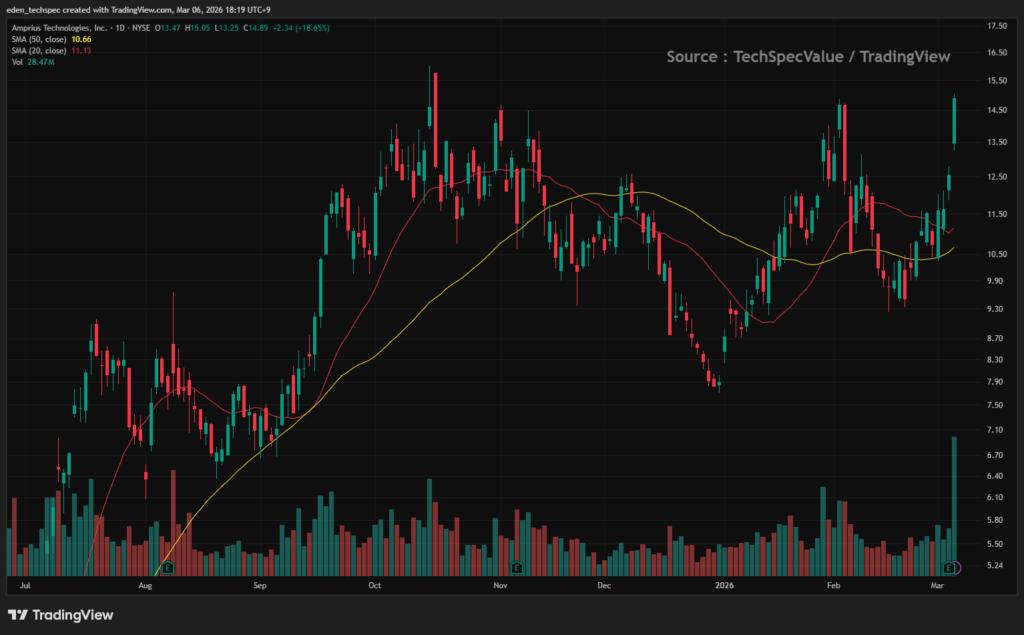
With the stock currently trading near $14.85—a significant jump from its February lows—the gap between its current valuation and the consensus analyst target of $17.00–$20.00 represents a classic “re-rating” phase. For Amprius Technologies, this move is driven by the transition from a high-burn startup to a high-margin technology provider.
PSR Re-rating Logic for Amprius Technologies
Historically, battery startups have been penalized with low multiples due to the “Valley of Death” in manufacturing. However, Amprius Technologies‘ 2026 revenue guidance of at least $125 million—a 70% year-over-year increase—places it in an elite category of high-growth tech-industrials. By applying a Price-to-Sales (P/S) ratio that reflects its sole-source status in aerospace, analysts at Needham and Craig-Hallum have recently raised their price targets to $20 and $17 respectively. This valuation is supported by the fact that Amprius Technologies‘ revenue is high-quality, product-based income, rather than speculative licensing fees, warranting a premium multiple as the company scales.
Earnings Quality and Profitability Roadmap
The quality of Amprius Technologies‘ earnings improved dramatically in the latest quarter. For the first time, the company generated a positive quarterly non-GAAP Adjusted EBITDA of $1.8 million, crushing the year-ago loss of $4.8 million. This “inflection point” is a powerful signal to institutional investors. Management’s 2026 outlook now projects a full-year Adjusted EBITDA of at least $4 million and a significantly narrowed net loss of less than $8 million (or $0.06 per share). For Amprius Technologies, achieving this level of fiscal discipline while growing at 70% is a rarity in the deep-tech sector, and it effectively removes the “bankruptcy risk” that previously weighed on the stock’s multiple.
Short-term Price Discovery
Institutional interest in Amprius Technologies has surged alongside its operational successes. As of early 2026, institutional ownership sits at approximately 52%, with major firms like BlackRock and Vanguard maintaining core positions. Furthermore, the termination of the company’s “At-The-Market” (ATM) equity program in January 2026 has removed a significant source of selling pressure, allowing for cleaner price discovery.
With a busy March 2026 schedule of investor conferences (including the Cantor Global Technology Conference and the ROTH Annual Growth Conference), Amprius Technologies is actively engaging with “Quality” funds. This institutional floor, combined with the “Capital-Light” pivot, makes the $20 target a highly probable milestone as the company moves toward full-year profitability.
6. Long-Term Vision 2028: The $30 – $40 Blue Chip Scenario
By 2028, Amprius Technologies (AMPX) is projected to move beyond its identity as a “niche aerospace supplier” and emerge as a fundamental cornerstone of the global energy infrastructure. The engineering roadmap from 2026 to 2028 focuses on one primary objective: the commoditization of silicon nanowire performance.
As a former systems engineer, I recognize that the true value of a hardware company is realized when its high-performance intellectual property reaches cost-parity with legacy technologies. With revised analyst projections anticipating 2028 revenue of approximately $306.6 million to $433 million, Amprius Technologies is not just growing; it is evolving into a high-margin powerhouse. This trajectory mathematically aligns with a share price in the $30 to $40 range, as the market begins to price in its long-term profitability.
Economy of Scale (EOS) and Cost Parity for Amprius Technologies
The primary hurdle for silicon anodes has historically been the “premium” price tag associated with specialized nanostructured manufacturing. However, by 2028, Amprius Technologies will have leveraged over 2 gigawatt-hours (GWh) of available manufacturing capacity through its “Capital-Light” strategy.
By utilizing high-volume tolling partners—including the Amprius Korea Battery Alliance and U.S.-based Nanotech Energy—the company is driving unit costs down the experience curve. We anticipate that by late 2027, the cost-per-kilowatt-hour (kWh) of SiCore cells will reach parity with high-end NMC cells. This price democratization is the “tipping point” that allows Amprius Technologies to move from elite defense contracts into high-volume industrial segments, offering a 2x energy density advantage at a price point that legacy manufacturers cannot match.
Total Addressable Market (TAM) Expansion
While the current narrative for Amprius Technologies is dominated by drones and eVTOLs, the 2028 horizon reveals an explosive expansion into the robotics and industrial sectors. The robotics market, which is projected to grow at a staggering 74% CAGR through 2030, represents a massive, untapped vertical.
Humanoid robots and high-torque industrial machinery require the exact “Ultra-High-Power” profile that only Amprius Technologies‘ silicon nanowires can provide without the thermal penalties of traditional batteries. By expanding its TAM from a niche aerospace market to a $100 billion+ diversified energy market, Amprius Technologies creates a “valuation floor” that is decoupled from any single sector’s cyclicality, ensuring robust, high-quality revenue growth well into the next decade.
The “Nvidia of Batteries” Comparison
In the technology sector, Nvidia became an indispensable platform because its hardware was the only solution capable of running high-level AI workloads. Amprius Technologies is tracking a strikingly similar trajectory within the energy sector. As the world transitions toward “The Great Electrification,” the company’s 520 Wh/kg platform is becoming the only hardware capable of powering the most demanding mobile applications.
Whether it is Nokia’s “drone-in-a-box” networks or L3Harris tactical gear, Amprius Technologies provides the unique burst power and sustained energy required for next-gen autonomy. If the company continues to set the industry benchmark for energy density, it will cease to be viewed as a mere battery manufacturer and will instead be valued as a high-multiple technology platform—the “Energy Engine” of the 21st century.
| Timeline | Scenario | Price Target | Rationale |
|---|---|---|---|
| Short-term (2026) | Base Case | $17.50 – $20.00 | 70% Revenue Growth + PSR Re-rating |
| Mid-term (2027) | Growth Case | $25.00 – $28.00 | Full UAM Certification Cycles |
| Long-term (2028) | Blue Chip Case | $30.00 – $40.00 | Mass Market Industrial Penetration |
7. Risk Management: A Professional Analyst’s Reality Check
As a former systems engineer, I recognize that no technological disruption is without its friction points. While the trajectory for Amprius Technologies (AMPX) is undeniably bullish, a disciplined investment strategy requires a cold, analytical look at the hurdles that could impede its path to $40. The transition from a “Silicon King” to a global blue-chip requires flawless execution of the “Capital-Light” model and constant vigilance against the rapid pace of battery chemistry evolution. However, when weighted against the company’s current financial health and its 550+ customer backlog, the risk-to-reward ratio remains one of the most compelling in the high-growth industrial sector.
Competitive Landscape and Technical Obsolescence
The primary long-term threat to Amprius Technologies is the eventual commercialization of Solid-State Batteries (SSB). As of early 2026, the industry is accelerating its transition from pilot-scale trials to mass production, with sulphide electrolytes becoming a major focus.
While companies like QuantumScape are moving toward pilot validation, Amprius Technologies holds a significant “First-Mover” advantage. SSBs still face interfacial resistance challenges and high manufacturing costs, whereas Amprius is already shipping field-validated 520 Wh/kg cells. The risk is not immediate replacement, but a narrowing of the performance gap by 2028, requiring Amprius to maintain its R&D lead to justify its premium valuation.
Execution & Supply Chain Risks
By adopting an “Asset-Light” strategy, Amprius Technologies has traded massive capital expenditures for a dependence on third-party tolling partners. This introduces “partner execution risk.” If a manufacturing partner in the Korea Battery Alliance or Nanotech Energy faces labor disruptions or equipment failure, Amprius’s ability to meet its $125 million revenue guidance could be impacted.
Furthermore, while the company is aggressively securing a domestic supply chain to remain NDAA-compliant, any global shortage of specialized silicon precursors could temporarily inflate production costs. To mitigate this, management’s expansion of global capacity to over 2.0 GWh provides a necessary buffer against localized supply shocks.
Conclusion and Final Verdict: From Speculation to Institutional Grade
Amprius Technologies has successfully navigated the “Valley of Death” that claims most deep-tech startups. The Q4 2025 pivot to a positive Adjusted EBITDA was the definitive proof of concept the market required. With a $91.9 million cash cushion, a fully transitioned product portfolio in SiCore, and a technical lead that is currently the “Gold Standard” for the $90 billion UAM and defense markets, the company is no longer a speculative play. It is a disciplined, high-growth industrial leader. For investors with a 24-to-36-month horizon, the path from the current price level to the $30–$40 range is supported by accelerating revenue, expanding margins, and an ironclad position as the “Energy Engine” of the 21st century.
Related Content:
- Top 3 Battery Stocks to Watch in the 2026 Defense Boom
- Why Silicon Anodes are Winning the Race Against Solid-State
- U.S. Department of Energy: Silicon Anode Development Progress
- FAA Urban Air Mobility Concept of Operations v2.0
Further Reading: