1. Introduction: From Fear to Fortitude on a Treacherous Monday
The Anatomy of the 2026 “Black Monday” Scare
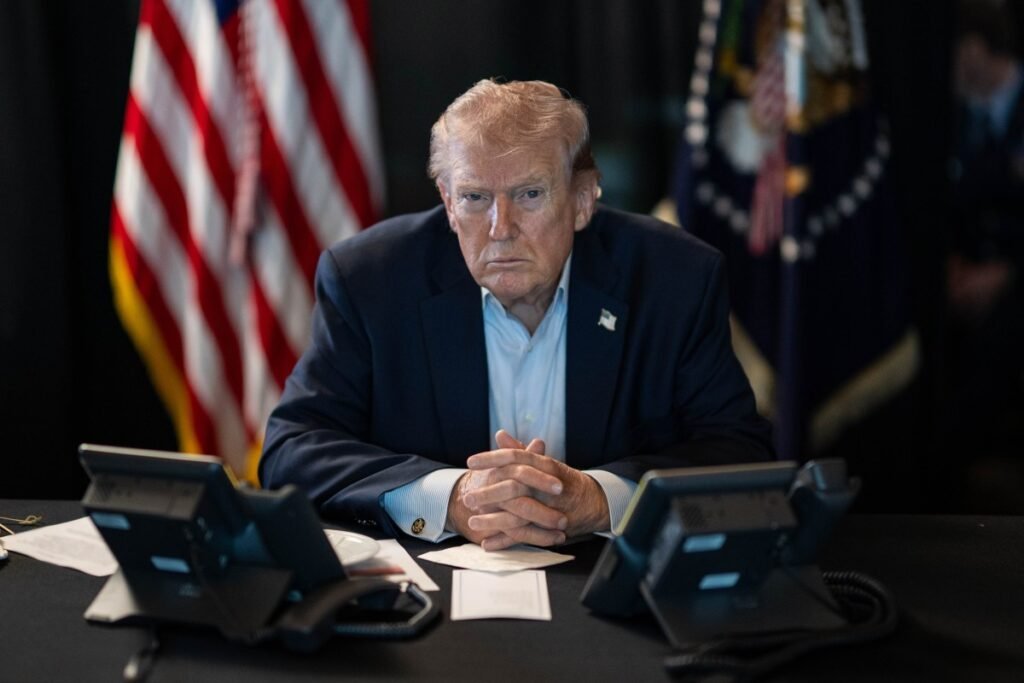
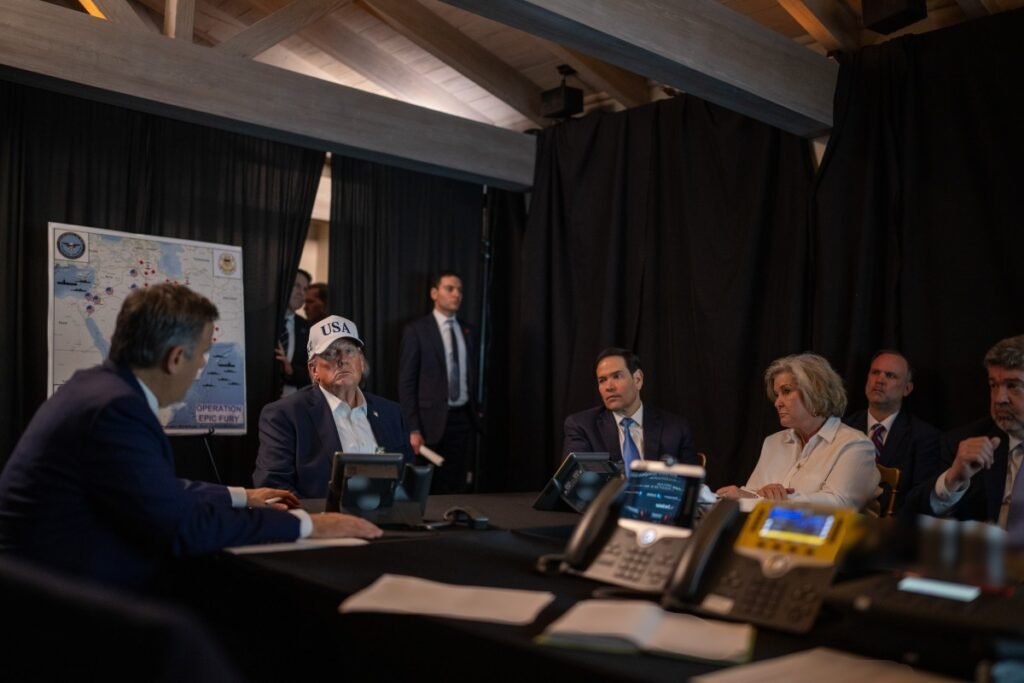
The trading session on March 3, 2026, was a masterclass in structural resilience within the context of the burgeoning US-Iran Conflict. As news of the kinetic military engagement and the escalation of the US-Iran Conflict broke over the weekend, the pre-market indicators for the Nasdaq (IXIC) signaled a catastrophic failure, dropping 1.6% in the opening minutes.
For the uninitiated, this looked like the beginning of a secular bear market triggered by the US-Iran Conflict, but from an analytical perspective, this was a “stress test” of the current AI-driven bull cycle. The initial shadow cast by the US-Iran Conflict was quickly dissipated by a wave of algorithmic buying and institutional re-entry, leading to a marginal but significant gain of 0.01% by the closing bell. This price action suggests that the market’s underlying “operating system” is currently programmed to prioritize long-term growth over the localized geopolitical noise typical of the US-Iran Conflict, effectively treating the situation as a transient glitch rather than a systemic crash.
Decoding the Market’s Hidden Signal Processing
To understand why the market recovered so aggressively despite the US-Iran Conflict, we must look at the “signal-to-noise” ratio of the current environment. While the media focused on the kinetic military aspects of the US-Iran Conflict, institutional capital focused on the “downside rigidity” of the tech sector. We are witnessing a decoupling where traditional “War Fright” associated with the US-Iran Conflict is being offset by “Innovation Optimism.”
As an analyst, I see this not as irrational exuberance, but as a calculated bet on the productivity gains of the late 2020s. The market is effectively saying that while the US-Iran Conflict may cause missiles to fly, the servers must stay up and the chips must keep shipping. This resilience in the face of the US-Iran Conflict is the bedrock upon which we must build our Q2 2026 investment thesis, identifying which nodes in the global supply chain are reinforced against the shocks of the US-Iran Conflict and which remain vulnerable to further escalation.
| Index/Asset | Opening Change | Closing Price/Change | Market Interpretation |
|---|---|---|---|
| Nasdaq (IXIC) | -1.60% | +0.01% | High-Conviction Recovery |
| WTI Crude Oil | +12.0% (Peak) | $71.23 (+6.3%) | Hormuz Blockade Premium |
| 10Y Treasury Yield | — | 2.17% (Spike) | Inflation Expectation Breakout |
| US Dollar Index (DXY) | 104.2 | 105.8 | Flight to Safety |
2. Macro Analysis: The Paradox of Surging Oil and Rising Rates
The Geopolitical Compression of Energy Markets
The most immediate telemetry from the US-Iran Conflict was the violent spike in WTI Crude Oil, which surged to $71.88, a 7.25% increase in a single trading session. From a systems engineering standpoint, the US-Iran Conflict places the Strait of Hormuz at the center of a global energy bottleneck, representing a single point of failure for international logistics.
The mere threat of a blockade resulting from the US-Iran Conflict creates a “bottleneck premium” that ripples through every sector of the S&P 500, impacting everything from transport costs to raw material pricing. We are currently observing a “Macro Compression” where the cost of energy, driven by the US-Iran Conflict, acts as a hidden tax on corporate margins. For investors, this means that $70+ oil in 2026 carries more systemic weight than in previous cycles, as the global economy is in the delicate process of re-shoring manufacturing—a process that is highly energy-intensive and sensitive to any escalation within the US-Iran Conflict.
Interest Rates and the Safe-Haven Inversion
Typically, in times of high-intensity friction like the US-Iran Conflict, we see a “flight to quality,” where investors rush into U.S. Treasuries, theoretically driving yields down. However, the current reaction to the US-Iran Conflict—specifically the 10-year Treasury yield spiking by 2.17%—presents a fascinating and dangerous paradox. This indicates that the bond market is more afraid of “sticky inflation” caused by the US-Iran Conflict than it is of the conflict’s immediate military impact.
We are seeing a shift from “Risk-Off” to “Inflation-On” as a direct consequence of the US-Iran Conflict. The market is pricing in a reality where the Federal Reserve is forced to maintain higher-for-longer interest rates to combat the supply-side shocks of the US-Iran Conflict. This creates a difficult environment for high-growth firms, as the “Risk-Free Rate” of return is recalibrated to account for the long-term inflationary tail of the US-Iran Conflict.
Alphabet (GOOGL) and the Ad-Spend Latency Vector
This high-interest-rate environment, triggered by the US-Iran Conflict, is particularly challenging for Alphabet (GOOGL). While Alphabet is an AI powerhouse, its primary revenue engine remains digital advertising, which acts as a high-sensitivity sensor for global economic health. As the US-Iran Conflict drives energy prices and interest rates higher, corporations typically initiate a “Defensive Spend Protocol,” slashing advertising budgets to preserve operating margins in anticipation of a slowdown caused by the US-Iran Conflict.
We saw GOOGL trade down 1.63% as the market began pricing in a potential “Ad-Revenue Latency” linked to the macro instability of the US-Iran Conflict. Furthermore, the rising electricity costs associated with the US-Iran Conflict directly impact the “Operating Efficiency” of Google’s massive data center footprint. For the strategic analyst, Alphabet’s performance serves as a warning that even the most dominant software platforms are not immune to the cascading economic frictions of the US-Iran Conflict.
| Sector / Stock | Daily Change | Primary Risk Factor | Investment Thesis |
|---|---|---|---|
| AI Hardware (NVDA) | +2.93% | Supply Chain Latency | Inelastic Demand / Buy Dips |
| Ad-Platforms (GOOGL) | -1.63% | Macro Ad-Spend Contraction | Wait for Data Center Recovery |
| eVTOL / AAM (JOBY) | -2.1% | Strategic Deployment Delay | Avoid until Regional Stability |
| Aerospace (NOC) | +5.43% | Kinetic Escalation | Long-Term Hedge / Overweight |
3. Sector Performance: The Kinetic Premium and the JOBY Disruption
The Defensive Moat of Aerospace Giants
In a high-friction geopolitical environment, the defense sector functions as the portfolio’s “fail-safe” mechanism. During the March 3rd session, we observed a textbook execution of capital rotation into prime contractors. Northrop Grumman (NOC) surged +6.03%, acting as the primary structural anchor. From a systems engineering perspective, these firms represent the “infrastructure of security.”
The US-Iran conflict essentially serves as a massive procurement signal for the next generation of autonomous defense systems. Investors are not just buying “war stocks”; they are investing in the rapid depletion and subsequent replenishment of high-tech munitions. This creates a multi-year visibility in order backlogs that is virtually decoupled from consumer spending trends, providing the necessary ballast for a volatile portfolio.
Joby Aviation (JOBY) and the Geopolitical Turbulence
While established defense firms thrived, the emerging Advanced Air Mobility (AAM) sector faced significant headwinds. Joby Aviation (JOBY), a leader in electric vertical takeoff and landing (eVTOL) aircraft, saw its risk profile expand overnight. From a strategic standpoint, a conflict in the Middle East—a region that has been a primary target for early eVTOL adoption and high-capital investment—threatens the “Deployment Roadmap” for JOBY.
Investors are concerned that kinetic escalation could delay regulatory partnerships in the Gulf and divert battery-supply resources toward military applications. As an analyst, I view JOBY through the lens of “Operational Fragility” during wartime; the capital-intensive nature of flight testing requires a stable macro environment which the current US-Iran friction actively destabilizes.
4. Tech Sector Analysis: The Unstoppable Gravity of NVDA vs. GOOGL
The Inelasticity of AI Demand Amidst Geopolitical Friction
Perhaps the most stunning data point during the recent escalation was NVIDIA (NVDA) closing +2.93% higher despite the overwhelming noise of the US-Iran Conflict. In previous market cycles, a macro shock like the US-Iran Conflict would have sent high-beta technology stocks into a tailspin as investors fled to cash. However, in 2026, NVDA is viewed not as a cyclical semiconductor play, but as the “CPU of the Modern World,” essential for both civilian and military intelligence.
The demand for AI inference and training is currently “Inelastic”—meaning it does not significantly decrease even as the US-Iran Conflict creates regional instability. Investors have reached a consensus: whether there is a diplomatic resolution or a further expansion of the US-Iran Conflict, the global arms race for Artificial Intelligence will continue unabated. From my perspective as an engineer, NVDA has become a “systemically important” node that thrives even when the US-Iran Conflict forces a re-rating of the broader market.
Alphabet (GOOGL) and the Operational Efficiency Challenge
In contrast to the hardware-centric resilience of NVDA, Alphabet (GOOGL) faced a much more complex set of variables as the US-Iran Conflict intensified. While Google’s DeepMind division remains a pillar of AI innovation, the company’s massive global data center footprint is highly sensitive to the energy price spikes triggered by the US-Iran Conflict. Rising electricity costs, a direct byproduct of the energy volatility in the US-Iran Conflict, impact the bottom-line “Operating Efficiency” of Google Cloud and Search operations.
Furthermore, the -1.63% performance of GOOGL highlights a growing institutional concern regarding “Macro-Ad Latency.” As global brands brace for potential supply chain disruptions and logistical bottlenecks in the US-Iran Conflict zone, they often hedge their bets by pausing large-scale digital marketing campaigns. This creates a temporary but measurable drag on Alphabet’s top-line growth, marking a significant divergence between the hardware “Providers” and the service “Platforms” during the US-Iran Conflict.
Strategic Diversification and the AI Defense Intersection
The divergence between these tech giants during the US-Iran Conflict underscores a shift in how we must define “Safety” in a modern portfolio. While Alphabet (GOOGL) struggles with the consumer-side fallout of the US-Iran Conflict, the market is beginning to price in the defensive utility of AI. We are seeing a synthesis where AI technology is increasingly being integrated into the very defense systems used in the US-Iran Conflict, creating a new sub-sector of “Defense-Tech.”
For Alphabet, the challenge is to pivot its massive compute power toward these mission-critical applications to offset the ad-revenue volatility caused by the US-Iran Conflict. As an analyst, I see this as a healthy rationalization; the US-Iran Conflict is forcing a “meritocracy of utility” where companies are valued based on their essential infrastructure rather than discretionary services. Investors should monitor how Alphabet reallocates capital to its cloud and AI units to mitigate the long-term macro risks posed by the US-Iran Conflict.
| Metric | Nasdaq (IXIC) | Alphabet (GOOGL) | Joby Aviation (JOBY) |
|---|---|---|---|
| Critical Support | 18,200 | $301.30 | $9.82 |
| Immediate Resistance | 18,650 | $311.40 | $11.94 |
| RSI (14-Day) | 45.2 | 42.1 | 36.5 (Oversold) |
| Candle Pattern | Hammer | Bearish Engulfing | Downward Channel |
5. Technical Analysis: The Geometry of the V-Shaped Recovery
Structural Integrity and the “Hammer” Formation
From a systems engineering perspective, the price action on March 3rd represented a “load test” on the primary support levels of the Nasdaq. When a market opens with a significant downside gap due to an external shock like the US-Iran conflict, the immediate priority for technical analysts is to monitor the “Gap Fill” probability.
Within the first 120 minutes of trading, high-frequency trading (HFT) algorithms identified a lack of follow-through selling, triggering a massive liquidity injection at the $18,200 level. This created a “Strong Hammer” candle formation on the daily chart. As an analyst, I view this as a validation of the current market’s structural integrity; the bullish “Main Loop” is still dominant, despite the geopolitical interrupts.
Volume Throughput and Conviction Metrics
To confirm the validity of a recovery, one must inspect the “Throughput” or trading volume. The March 3rd session saw a 25% increase in average daily volume, indicating that the rebound was not a low-conviction “dead cat bounce” but a high-conviction re-accumulation phase. Momentum oscillators, specifically the RSI, showed a sharp upward “hook” from the 45-level, suggesting the market was in a state of “Dynamic Equilibrium.”
The conflict acted as a catalyst to flush out “weak hands,” effectively resetting the market’s technical buffer for a potential move toward new all-time highs. For the disciplined trader, this volume spike provides the necessary “Proof of Work” that current price levels are accepted by the market’s largest liquidity providers.
6. Future Outlook: Navigation through the Hormuz Risk Vector
Alphabet (GOOGL) and the Ad-Spend Vulnerability
Within the technology sector, Alphabet (GOOGL) serves as a high-sensitivity sensor for global consumer sentiment. Unlike the “Inelastic Demand” seen in NVDA’s chips, Alphabet’s revenue model is tethered to the discretionary budgets of global corporations. As the US-Iran conflict drives energy prices higher, companies typically initiate a “Defensive Spend Protocol,” slashing advertising budgets to preserve operating margins.
From my perspective, Alphabet’s recent dip is a direct reflection of the market pricing in a “Contraction Cycle” in digital marketing. If the conflict persists, Alphabet faces a double-edged sword: rising infrastructure costs for their AI data centers and a simultaneous cooling of the YouTube and Search ad-markets.
Joby Aviation (JOBY) and Capital Expenditure Risks
The primary concern for Joby Aviation (JOBY) in the wake of Middle Eastern instability is the “Cost of Capital” and “Strategic Focus.” In a high-inflation, high-interest-rate environment triggered by oil spikes, speculative growth stocks like JOBY often see their valuations “compressed.” Furthermore, the Middle East—specifically the UAE and Saudi Arabia—has been a cornerstone for JOBY’s international expansion plans.
A regional conflict creates “Operational Friction” that could delay the rollout of urban air taxi networks. As an engineer, I classify JOBY as a “High-Beta Speculative Node”; it offers immense long-term upside but is currently vulnerable to the macro-economic “vibrations” caused by the US-Iran escalation, making it a stock for those with a high tolerance for turbulence.
The Dollar Strength and Global Capital Migration
In times of kinetic conflict, the “Safe Haven” effect usually triggers a massive migration of capital into the U.S. Dollar (DXY). While this reinforces the purchasing power of U.S.-based institutions, it creates a “Liquidity Squeeze” for multinational corporations like Alphabet that derive a large portion of their earnings from overseas.
As an analyst, I am monitoring the DXY index closely; a sustained breakout above the 106-level would indicate that the market is bracing for a prolonged period of geopolitical instability. This “Strong Dollar” regime acts as a natural brake on the earnings growth of the S&P 500, essentially acting as a quantitative tightening measure without the Fed’s direct intervention.
7. Conclusion: The Barbell Strategy for a High-Friction Era
Engineering a Geopolitical-Resistant Portfolio
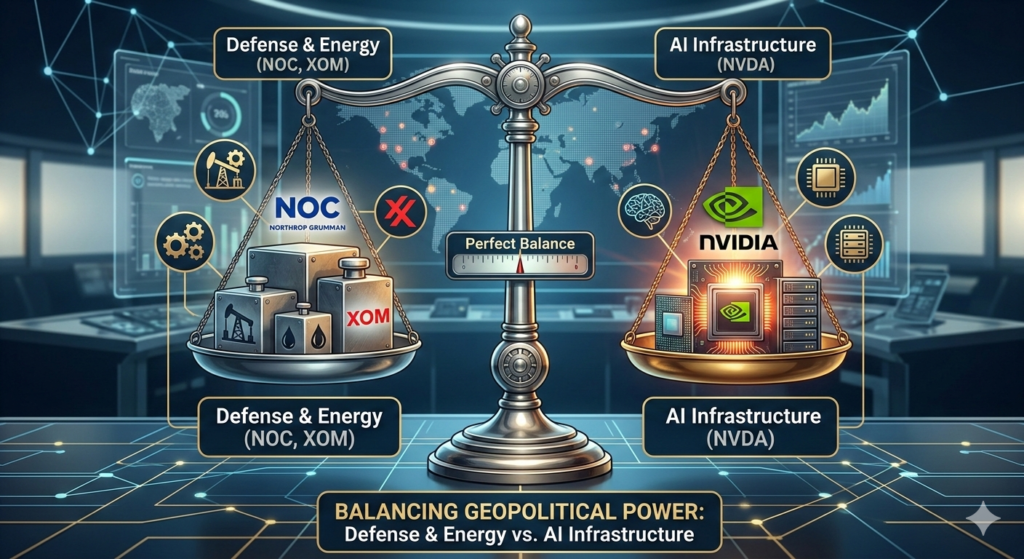
The events of March 3, 2026, have provided a clear architectural blueprint for the modern investor. We are no longer in a market that moves as a monolithic block; instead, we are seeing a profound bifurcation. To navigate the US-Iran conflict, one must adopt a “Barbell Strategy.” On one end, you require the “Armor” of the defense and energy sectors (NOC, LMT, XOM) to protect against supply-side shocks and kinetic escalations.
On the other end, you must maintain exposure to the “Engine” of the future: high-conviction AI infrastructure (NVDA). This configuration ensures that your portfolio is balanced to capture the unprecedented productivity gains of the AI revolution while remaining insulated from the inflationary pressures of a Middle Eastern energy crisis. My analytical conclusion is that the “Resilience” we saw on Monday is not a reason for complacency, but a call for strategic rebalancing.
Final Execution Protocol and Opportunity Amidst the Fog of War
In closing, the US-Iran conflict serves as a stark reminder that volatility is the price of admission for superior returns in 2026. While the DXY Index spiking to 105.8 and oil settling at $71.23 create significant short-term headwinds, the underlying “Systemic Growth” of the tech sector remains the most powerful force in the market.
The high-volume V-shaped recovery we analyzed suggests that smart money is looking past the missiles and toward the long-term margin expansion offered by autonomous systems and generative intelligence. Your action plan should be precise: use any further geopolitical “dips” to accumulate Tier-1 AI assets, while maintaining a 15-20% hedge in defense. This is not just a market of fear; it is a market of radical transition.
Futher reading
- Reuters: Geopolitical Risk and Global Market Stability
- U.S. Energy Information Administration (EIA): Short-Term Energy Outlook
- JOBY Stock Forecast: The 7-Step Engineering Deep Dive for 2026
- Solid Power SLDP Analysis: Game-Changing Breakthrough or Mirage?
- Alphabet Stock Forecast 2030: Epic Bullish Analysis
- LAC Stock Analysis: Massive Lithium Potential and Strategic Outlook
- Microsoft MSFT Analysis: The Great AI De-rating of 2026