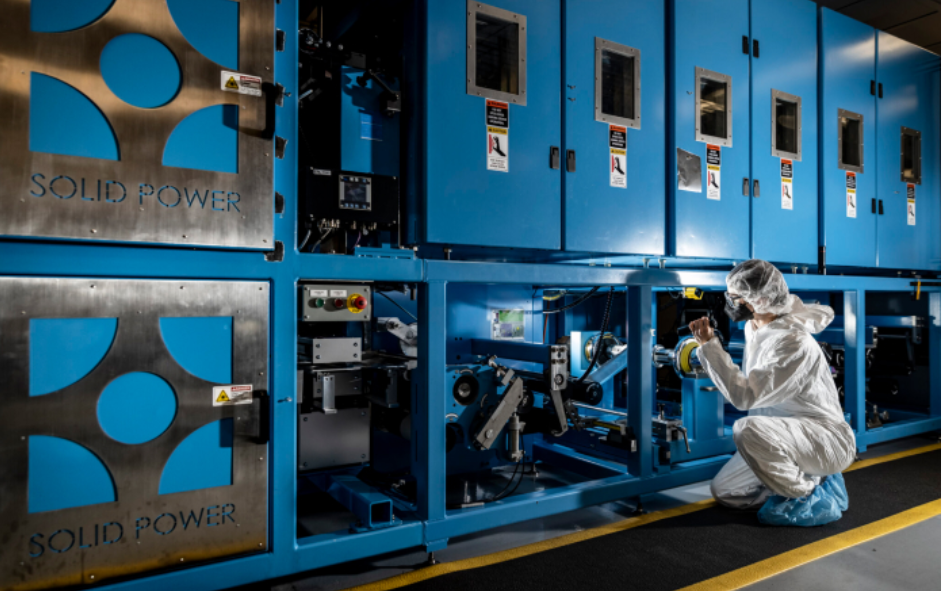
1. Introduction: Game Changer or Mirage? The 2026 Reality Check
The Transition from Theory to Validation in Solid Power
As we navigate February 2026, the global energy storage narrative has undergone a fundamental shift, making a rigorous assessment of Solid Power more critical than ever for institutional portfolios. For years, solid-state batteries (SSBs) were dismissed as a “holy grail”—a theoretical breakthrough perpetually five years away. However, we have officially entered the era of empirical verification. The inherent limitations of liquid lithium-ion batteries, specifically the persistent fire risks associated with flammable organic electrolytes and the ceiling on energy density near 300 Wh/kg, have made the transition to solid-state an inevitability.
Solid Power stands at the epicenter of this transition, not merely as a speculative dreamer, but as the premier provider of sulfide-based electrolyte technology. This technology effectively addresses the dendrite growth issues that plagued early polymer and oxide-based attempts. The market is no longer satisfied with lab-scale prototypes; in 2026, the performance of A-sample cells integrated into BMW’s test fleets is the primary driver of institutional sentiment. This year represents the “Valley of Death” or the “Peak of Promise” for Solid Power, as real-world telemetry data replaces simulated cycles in the eyes of cautious Wall Street analysts who demand proof over promises.
Why the Timeline Keeps Shifting: A Technical Post-Mortem of Solid Power
One must ask: why has the commercialization timeline for solid-state technology been so elusive in the journey of Solid Power? From an engineering perspective, the challenge wasn’t just the chemistry; it was the “interface.” Maintaining consistent contact between solid components during the repeated expansion and contraction of charging cycles (anisotropy) requires sophisticated pressure management and material elasticity. Solid Power’s sulfide electrolyte offers superior mechanical properties and ionic conductivity compared to oxides, yet scaling this to automotive grade requires flawless manufacturing precision at a scale never before seen.
We must be realistic: the delays documented in the history of Solid Power between 2022 and 2025 were the necessary result of refining these manufacturing tolerances to ensure that a 100Ah cell performs with the same reliability as a 2Ah lab cell. As an analyst, I view these delays not as failures, but as the essential friction of bringing a Tier-1 automotive component to market. In 2026, the narrative is no longer about if the technology works, but how fast the supply chain can stabilize around the sulfide powder produced by Solid Power. This is the year where “Sample Performance” dictates the “Stock Price,” and the window for early-stage entry is rapidly narrowing.
2026: The Year Road Data Defines the Solid Power Valuation
The most critical takeaway for Solid Power in 2026 is that we have moved past the “R&D expense” phase and into the “validation revenue” phase. Unlike 2024, where the stock was traded on macro-sentiment and interest rate swaps, the current valuation is tied to the successful commissioning of the high-throughput electrolyte production line. The engineering depth of Solid Power is now being measured by the purity of its sulfide output and the cycle-life consistency of the B-samples being prepped for late 2026.
This section of our analysis highlights that for the first time, the company’s capital allocation is directly translating into physical hardware currently on the road in Munich. The “mirage” has evaporated, leaving behind a tangible industrial process that is currently being scrutinized by the world’s most demanding OEMs. Investors must realize that the “Verification Alpha” found in Solid Power today is what separates 2026 from the speculative bubbles of the past; we are now measuring success in kilowatt-hours and sulfur purity, not just press releases.
2. Company Overview: The ‘Solution Partner’ Not a Manufacturer
Avoiding the CAPEX Trap with an Asset-Light Model
The most significant differentiator for Solid Power, and the core of my fundamental “Buy” thesis in 2026, is its strategic refusal to become a traditional high-volume battery manufacturer. In the world of systems engineering, we are trained to identify and mitigate bottlenecks; in the current battery landscape, the most lethal bottleneck is the astronomical Capital Expenditure (CAPEX) required to construct and maintain Gigafactories. While competitors like QuantumScape are burning through billions of dollars in precious liquidity to establish proprietary, unproven manufacturing lines—essentially betting their entire corporate existence on the ability to master mass production from scratch—Solid Power has pivoted to a highly efficient “Solution Partner” model.
This approach drastically lowers the entry barrier for high-performance energy storage. By focusing on the “Solid Power” core competency of chemical engineering rather than industrial real estate, the company avoids the crushing depreciation and operational overhead that typically plagues hardware-heavy startups. In an era where capital efficiency is the primary metric for Wall Street, the Solid Power strategy of decoupling innovation from physical production volume stands as a beacon of financial prudence.
Compatibility: The Ultimate Competitive Moat
This sophisticated business model involves two primary, high-margin revenue streams that define the Solid Power investment profile. First, the high-margin sale of sulfide-based solid electrolytes serves as the recurring engine of growth. As the industry moves toward solid-state, Solid Power positions itself as the primary material provider, ensuring that regardless of which OEM wins the EV race, they will likely need the sulfide powder perfected by Solid Power.
Second, the high-leverage licensing of their proprietary cell designs allows for exponential scaling without the need for additional factory workers or equipment. By positioning themselves as the “Intel of Batteries,” providing the essential “inside” components while allowing established industrial giants like BMW and SK On to handle the heavy lifting of physical assembly, Solid Power drastically reduces its systemic financial risk. This model allows the management team at Solid Power to maintain a leaner, more agile balance sheet and focus their R&D resources exclusively on chemical iterations and ionic conductivity enhancements, ensuring they remain the undisputed standard-setter for electrolyte purity in an increasingly crowded and competitive field.
Compatibility: The Ultimate Competitive Moat for Solid Power
The true engineering masterstroke discovered in any deep dive into Solid Power is “Standard Lithium-ion Equipment Compatibility.” While alternative solid-state architectures—such as those utilizing oxide or polymer bases—require entirely new, multi-billion dollar vacuum-sealed assembly environments or specialized high-temperature sintering processes, the sulfide electrolyte from Solid Power is designed to be integrated into existing “Roll-to-Roll” (R2R) manufacturing lines with minimal modification. This compatibility is far more than a mere engineering convenience; it represents a massive, multi-billion dollar economic moat for Solid Power. In the comparison table below, we can clearly see how this architectural decision separates the long-term viability of Solid Power from its peers.
For a global partner like SK On or Samsung SDI, the ability to repurpose existing, depreciated lithium-ion infrastructure to produce next-generation solid-state cells using Solid Power technology represents a saving of hundreds of millions in potential stranded assets. While others in the sector are attempting to reinvent the entire manufacturing wheel, Solid Power is providing a superior “rubber compound” that fits perfectly onto existing rims. This strategy ensures that when the global automotive industry finally reaches the “tipping point” for solid-state adoption, the path offered by Solid Power will be the path of least resistance, least cost, and highest reliability for every major OEM on the planet.
| Feature | Solid Power (SLDP) | QuantumScape (QS) | Traditional Li-ion |
|---|---|---|---|
| Electrolyte Base | Sulfide-based (Solid) | Ceramic/Oxide-based | Organic Liquid (Flammable) |
| Mfg. Compatibility | High (Roll-to-Roll) | Low (Custom Equipment) | Native |
| Business Model | Electrolyte + Licensing | Direct Manufacturing | Commoditized Mfg. |
| Primary Advantage | CAPEX efficiency | Energy Density (Lithium Metal) | Low Cost / Proven Scale |
3. Technical Analysis: The Sulfide Advantage and Manufacturing Synergy
Sulfide Electrolytes: The High-Conductivity Benchmark
In the engineering hierarchy of solid-state materials, sulfide-based electrolytes (Sulfide SSEs) are the clear winners for high-performance automotive applications. As of 2026, the primary challenge for solid-state has been ionic conductivity—the speed at which lithium ions move through the material. While polymer electrolytes require high temperatures to function and oxides suffer from extreme brittleness, SLDP’s sulfide chemistry achieves ionic conductivity levels comparable to, or even exceeding, traditional liquid electrolytes ($10^{-3}$ S/cm).
This is the “secret sauce” that enables ultra-fast charging, a critical requirement for EV mass adoption. Furthermore, the mechanical “softness” of sulfides allows them to deform under pressure, ensuring the electrode-electrolyte interface remains intact during the physical stresses of charging. From a systems perspective, this reduces the complexity of the battery pack’s thermal and pressure management systems, leading to a more efficient and durable final product.
Roll-to-Roll: The Bridge to Mass Production
The most overlooked aspect of the SLDP thesis is “Standard Lithium-ion Equipment Compatibility.” To an engineer, the most expensive part of a new technology isn’t the research; it’s the “tooling.” Most solid-state competitors require entirely new manufacturing ecosystems. Solid Power, however, has engineered its sulfide electrolyte to be compatible with existing Roll-to-Roll (R2R) production lines.
This means that a Tier-1 battery maker doesn’t need to scrap their multi-billion dollar slurry-coating and calendaring equipment. They can simply swap the liquid electrolyte filling stage for SLDP’s solid-state process. This drastically lowers the “Barrier to Entry” for partners. By utilizing the existing supply chain infrastructure, SLDP is not just selling a battery; they are selling a seamless upgrade path. In 2026, as manufacturers face thinning margins, the ability to minimize CAPEX while maximizing performance is the ultimate competitive advantage.
4. Partnerships: The BMW-Samsung SDI-SK On ‘Triangle of Trust’
The Samsung SDI & BMW Joint Evaluation: A New Catalyst
The narrative around SLDP strengthened significantly in late 2025 and early 2026 with the formalization of the “Triangular Alliance” between BMW, Samsung SDI, and Solid Power. While BMW and SK On were the original anchors, the inclusion of Samsung SDI into a “Joint Evaluation Agreement” (JEA) serves as a powerful validation of SLDP’s technology.
Under this agreement, Solid Power supplies its high-purity sulfide electrolyte to Samsung SDI’s “S-Line” pilot production facility. Samsung then utilizes its world-class cell-assembly expertise to create standardized prismatic cells, which are then integrated into BMW’s next-generation “Neue Klasse” test vehicles. This isn’t just a pilot program; it’s a global verification pipeline. For investors, this means SLDP’s technology is being stress-tested by the most rigorous automotive and battery engineers in the world.
Capital Commitment as a Proxy for Technical Purity
In the 2026 market, “letters of intent” are cheap; capital commitments are not. The fact that BMW and SK On have consistently “poured actual capital” into SLDP’s development—including the establishment of a sulfide electrolyte production line in South Korea—demonstrates a level of technical confidence that retail investors often overlook. Unlike many EV SPACs that struggled with “vaporware” accusations, SLDP has delivered physical A-sample cells that are currently undergoing real-world telemetry testing in Munich and Seoul.
This partnership ecosystem creates a virtuous cycle: as Samsung SDI refines the manufacturing process, SLDP gains invaluable data to iterate its electrolyte chemistry. This collaborative “feedback loop” is exactly how complex systems are perfected. If the data from these 2026 test fleets remains positive, the transition from “Evaluation” to “Off-take Agreements” will be the primary catalyst for a massive valuation re-rating.
| Financial Metric | Value (Est. Q1 2026) | Strategic Impact |
|---|---|---|
| Total Liquidity | ~$336.5 Million | Runway extended to 2028 |
| Direct Offering (Jan ’26) | $130 Million | Institutional “Vote of Confidence” |
| Debt-to-Equity | 0.02 | Extremely low insolvency risk |
| Annual Cash Investment | $85M – $105M (Est.) | Sustainable burn for R&D scale-up |
5. Financial Analysis: The 2026 “Cash Fortress” Strategy
Direct Offering: Securing the Runway to 2028
In late January 2026, Solid Power executed a decisive financial maneuver that effectively silenced “going concern” skeptics. The company closed a $130 million Registered Direct Offering, backed by a major sector-focused institutional investor. While some retail investors view offerings as mere dilution, a systems engineer sees this as “redundancy planning.” By pricing shares at $5.70 with accompanying warrants exercisable at $7.25, SLDP didn’t just raise cash; they established a strategic floor for the stock.
This injection, combined with their existing liquidity, brings their total war chest to approximately $336.5 million (unaudited) as of the start of this year. Given the current “burn rate” associated with scaling their sulfide electrolyte pilot line, this capital provides a comfortable runway into 2027 and likely 2028, ensuring they can reach the “B-Sample” validation phase without returning to the trough in a high-interest-rate environment.
The “SaaS-like” Margin Potential of Electrolyte Sales
As an analyst, I focus on the quality of the balance sheet. Unlike traditional manufacturers whose margins are eroded by raw material costs and labor, SLDP’s model—selling the specialized sulfide powder and licensing designs—mirrors the high-margin profile of a specialty chemical or software firm. By the end of 2025, revenue from joint development agreements (JDAs) and government grants provided a steady base, but the real “Alpha” lies in the scalability of their electrolyte production.
With a 0% debt-to-equity ratio and a lean operational structure, every dollar of revenue recognized from electrolyte sales has a higher flow-through to EBITDA than any of their peers who are burdened with the overhead of full cell manufacturing. This “Cash Fortress” isn’t just about survival; it’s about the firepower to out-innovate competitors during the critical 2026–2027 validation window.
6. Stock Price Outlook: The 2026–2030 Roadmap
2026–2027: The A-Sample Inflection Point
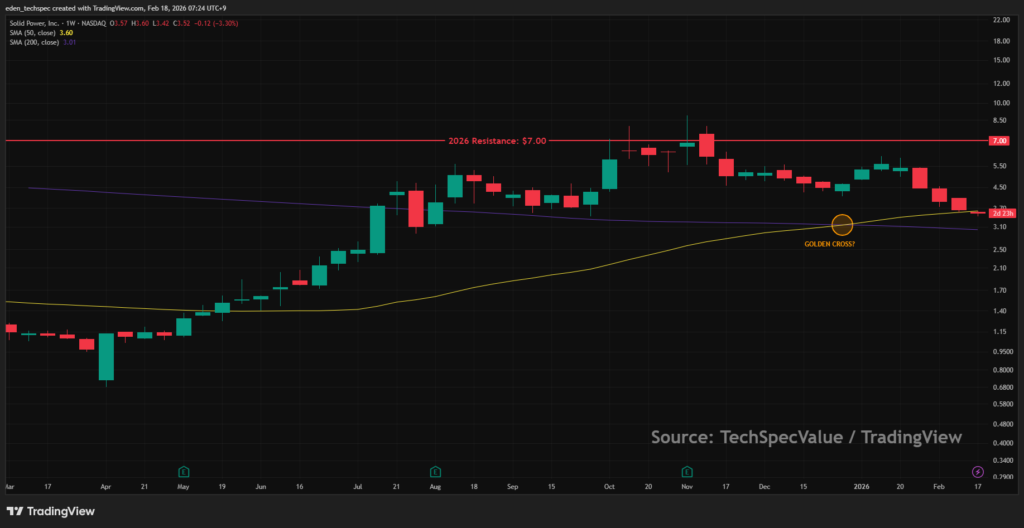
The consensus among institutional analysts for 2026 remains cautiously optimistic, with an average price target ranging from $7.00 to $7.35. This represents nearly a 100% upside from late-2025 lows. The primary trigger for this move will be the public release of telemetry data from BMW’s test fleets. If the A-sample cells demonstrate the promised energy density of >390 Wh/kg and stable cycle life at 20°C, the stock will likely breach the $7.00 resistance level. During this phase, investors should expect “sideways chop” followed by “vertical spikes” on news of successful pilot line commissioning in Colorado and South Korea. This is a “Show-Me” period where technical milestones translate directly into multiples.
2028–2030: The “Blue Sky” Scaling Scenario
Looking further out, the 2028–2030 window represents the transition from a “pre-revenue” tech play to a “growth” industrial giant. By 2028, as pilot production yields to commercial off-take agreements with BMW and potentially Samsung SDI, we project a price target range of $15.00 to $20.00. In our “Blue Sky” scenario for 2030—assuming solid-state batteries achieve a 10% market penetration in the premium EV segment—SLDP’s licensing and electrolyte revenue could drive the stock toward $40+.
At this stage, the company would be valued not on potential, but on its role as the indispensable “inside” component of the global EV supply chain. The path is not linear, but for those who understand the engineering lead SLDP has maintained, the long-term risk-reward profile is skewed heavily toward the upside.
| Year | Target Price | Key Milestone |
|---|---|---|
| 2026 | $7.00 – $7.35 | A-Sample validation & Pilot Line commissioning |
| 2027 | $9.00 – $12.00 | B-Sample delivery & Samsung SDI mass-production prep |
| 2028 | $15.00 – $20.00 | First meaningful licensing & electrolyte revenue |
| 2030 | $40.00+ (Blue Sky) | 10% market penetration of ASSB in premium EVs |
7. Conclusion: High-Risk Conviction for ‘Incentivized Capital’
The Verdict: A Strategic Infrastructure Play
Solid Power (SLDP) is no longer a “binary bet” on whether solid-state technology exists; it is now a play on the standardization of the sulfide electrolyte supply chain. The transition from lab-scale batches to the 75-metric-ton continuous production pilot line in 2026 is the final engineering hurdle before commercial off-take agreements. By successfully integrating into the Samsung SDI and BMW validation pipeline, SLDP has secured a seat at the table with the world’s most disciplined automotive engineers. This is not a stock for those seeking short-term dopamine hits from retail volatility. Rather, it is a foundational asset for “patience capital”—investors who recognize that the shift from liquid to solid electrolytes is a once-in-a-century industrial pivot.
The 2026 Strategy: Accumulation on Validation
We must be clear: the “Ten-Bagger” potential of SLDP requires a multi-year horizon. However, 2026 provides the most attractive entry point since the SPAC era. With a cash runway extending into late 2028 and the technical backing of BMW and Samsung SDI, the “bankruptcy risk” that suppressed the stock in 2024–2025 has been effectively neutralized. The 2026 catalyst is the A-sample telemetry; the 2028 catalyst is the licensing revenue. If you can withstand the cyclicality of the EV sector, the engineering conviction behind SLDP suggests that the current valuation significantly discounts its future role as the “Intel Inside” of the next generation of mobility.