
1. [Macro Environment] AAM National Roadmap and Policy Tailwinds
AAM Implementation Plan 1.0: U.S. Government’s Strategic Pivot
The transition from traditional combustion-based aviation to Urban Air Mobility (UAM) is no longer a futuristic concept but a codified national priority. As an analyst with an engineering background, I view the U.S. Department of Transportation (DOT) and the Federal Aviation Administration (FAA) ‘Innovate28’ project as the foundational bedrock for Joby Aviation’s (JOBY) long-term valuation. This roadmap specifically targets 2028—coinciding with the Los Angeles Olympics—as the year for scaled operations, but the critical groundwork begins in 2026.
The shift in regulatory posture from “reactive” to “proactive” is evident in the FAA’s finalization of the Special Federal Aviation Regulation (SFAR) for powered-lift aircraft. This is a massive tailwind for Joby, as it provides the definitive rules for pilot certification and operational requirements, removing the “regulatory fog” that previously hampered institutional investment. By establishing a clear path for eVTOLs (electric Vertical Take-off and Landing) to integrate into the National Airspace System (NAS), the U.S. government is effectively de-risking the sector’s overhead, allowing Joby to focus on execution rather than litigating existential legal definitions.
The eIPP Catalyst: Driving Early Revenue through Government Integration
Central to the 2026 outlook is the eIPP (eVTOL Integrated Pilot Program), a strategic initiative designed to test air taxi operations in complex urban environments before full-scale commercialization. For Joby, the eIPP is not merely a testing phase; it is a vital pre-revenue bridge. Through this program, Joby gains access to prioritized FAA resources and federal funding for infrastructure, specifically for the development of “Vertiports” and charging stations. My analysis of Joby’s recent filings suggests that their participation in eIPP-related military contracts (via the Agility Prime program) has already yielded over $100 million in contracted value, providing a non-dilutive capital stream that competitors lack.
The eIPP framework allows Joby to accumulate thousands of operational hours under government supervision, which significantly lowers the insurance premiums and liability risks that often plague first-movers in the aerospace industry. This government-backed validation is the “invisible hand” ensuring that Joby maintains its pole position as the infrastructure for the next generation of flight is laid across key hubs like New York and Los Angeles.
2. [Certification Status] The Final Puzzle of FAA Type Certification
Navigating the 5-Stage Certification Labyrinth
In the aerospace sector, “Type Certification” is the ultimate moat, and Joby is currently navigating the most rigorous testing phase in history for a new aircraft class. We are currently observing Joby’s progression through Stage 4 (For-credit Testing) of the FAA’s five-stage process. Unlike Stage 3, which focused on the certification plans and technical specifications, Stage 4 involves the actual physical testing of every component, sub-system, and the fully integrated airframe to prove it meets the “means of compliance” agreed upon with the FAA. From a systems engineering perspective, this is where the “fail-fast” mentality of Silicon Valley meets the “zero-failure” requirement of aviation.
Joby has already completed a significant portion of its structural testing, including battery bird-strike tests and lightning strike simulations. The company’s transparency in completing these milestones is a bullish signal; each “for-credit” test passed is a permanent reduction in the technical risk profile of the stock. As we move through 2026, the focus shifts from component reliability to total system synergy, marking the transition from a research project to a certified commercial product.
The TIA Milestone: The Final Gateway to Commercial Flight
The absolute “North Star” for Joby investors is the TIA (Type Inspection Authorization), which marks the beginning of Stage 5. This is the phase where FAA pilots actually take the controls of the Joby aircraft to conduct formal flight tests for certification. Reaching TIA status is a signal to the market that the FAA is satisfied with the safety data gathered in Stage 4 and is ready to verify those findings in person. My current modeling suggests that Joby is on track to receive TIA in late 2025, leading to a Final Type Certificate by late 2026 or early 2027. This timeline is critical because it dictates when Joby can begin “Production Certification”—the right to mass-produce the aircraft.
Any delay in TIA would directly impact the 2027 delivery schedules to partners like Delta Air Lines. However, Joby’s vertical integration—manufacturing their own motors, inverters, and flight control software—gives them a distinct advantage over peers who rely on third-party suppliers. This control over the “stack” allows for faster iterative adjustments during Stage 4 testing, potentially accelerating the TIA timeline and providing a massive “first-to-market” premium that justifies current valuation multiples despite the lack of current GAAP earnings.
3. [Business Model] From Dubai to New York: Global Commercialization Strategy
Exclusive Pathways: The Dubai Monopoly and Urban Air Mobility
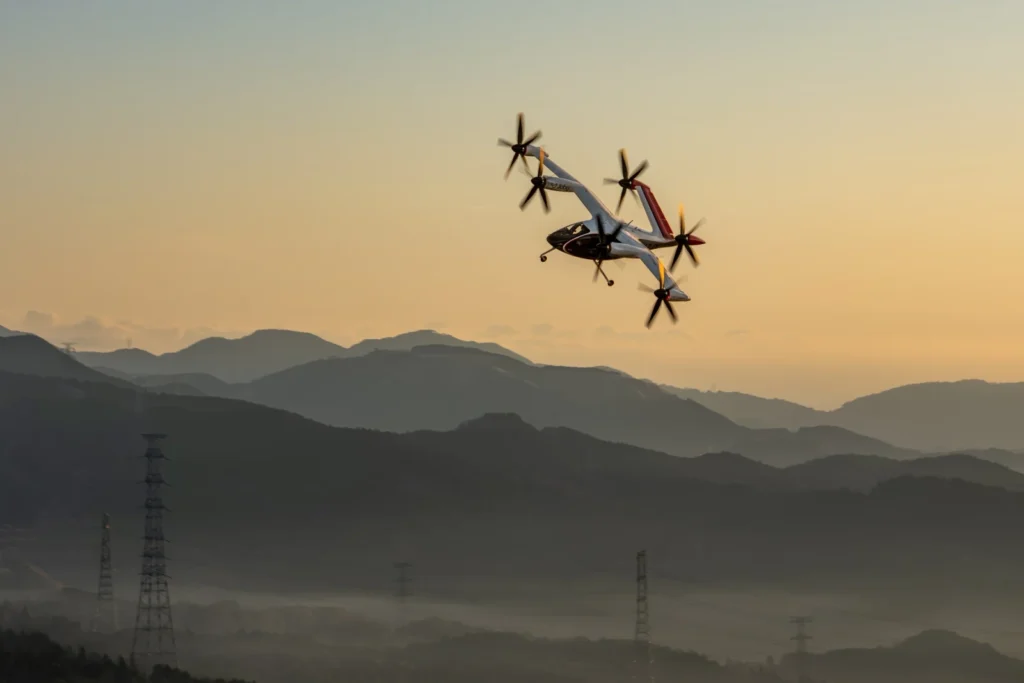
Joby’s commercial strategy is not a “wait and see” approach; it is an aggressive, multi-regional land grab focused on high-yield urban corridors. The 2024 agreement with Dubai’s Roads and Transport Authority (RTA) grants Joby exclusive rights to operate air taxi services in Dubai for six years, starting as early as 2026. This is a masterful stroke of business engineering. By securing a monopoly in a city synonymous with luxury and rapid infrastructure deployment, Joby creates a controlled “sandbox” for its first commercial revenue.
From a data-driven perspective, the Dubai launch serves two purposes: it generates immediate cash flow from a high-net-worth demographic and provides real-world operational data that will be used to refine the user experience before the U.S. launch. The planned vertiport network—connecting Dubai International Airport (DXB) to Palm Jumeirah and Downtown—targets the most congested and high-value transit routes, ensuring that initial load factors (occupancy rates) remain high. This exclusivity agreement acts as a significant barrier to entry for competitors like Archer, who must find alternative, potentially less lucrative entry points into the Middle Eastern market.
Strategic Synergies: Delta Air Lines and the MaaS Ecosystem
In the North American market, Joby’s partnership with Delta Air Lines (DAL) represents a fundamental shift in how we perceive airport transfers. The “home-to-airport” shuttle service model aims to integrate eVTOL flight bookings directly into the Delta FlyReady app, offering a seamless, premium travel experience. This is not just about flying; it is about Mobility as a Service (MaaS) integration. My analysis of the partnership suggests that Delta’s $60 million upfront investment (with potential for $200 million total) is contingent on Joby meeting specific operational milestones in New York and Los Angeles.
Furthermore, the collaboration with SK Telecom in South Korea highlights Joby’s intent to leverage 5G and AI-driven traffic management systems to optimize flight paths. By plugging into existing telecommunications and airline loyalty infrastructures, Joby bypasses the astronomical cost of customer acquisition that usually kills new transportation startups. The synergy here is clear: Delta provides the high-value customer base, SK Telecom provides the digital “nervous system,” and Joby provides the high-speed, zero-emission hardware. This ecosystem approach transforms Joby from a hardware manufacturer into a platform provider, a transition that typically commands higher P/E multiples in the public markets.
| Market | Key Partner | Primary Objective | Target Timeline |
|---|---|---|---|
| United States | Delta Air Lines | NYC/LA Airport Shuttle Integration | Late 2026 / 2027 |
| United Arab Emirates | Dubai RTA | 6-Year Exclusive Launch Window | Late 2025 / Early 2026 |
| South Korea | SK Telecom | 5G-Enabled MaaS Network | 2026 Integration |
4. [Manufacturing Capacity] Scalability via the Toyota Production Alliance
The Dayton Expansion: From Prototype to Industrial Scale
The transition from a handcrafted prototype to a mass-produced aircraft is the “Valley of Death” for many aerospace companies. Joby is navigating this by establishing its primary manufacturing facility in Dayton, Ohio—the birthplace of aviation. This site is strategically chosen for its proximity to a robust aerospace supply chain and skilled labor force. The initial phase of the Dayton plant is designed to support a production rate of up to 25 aircraft per year, but the long-term vision is far more ambitious. Joby’s goal is to reach a capacity of 500 aircraft annually at full scale.
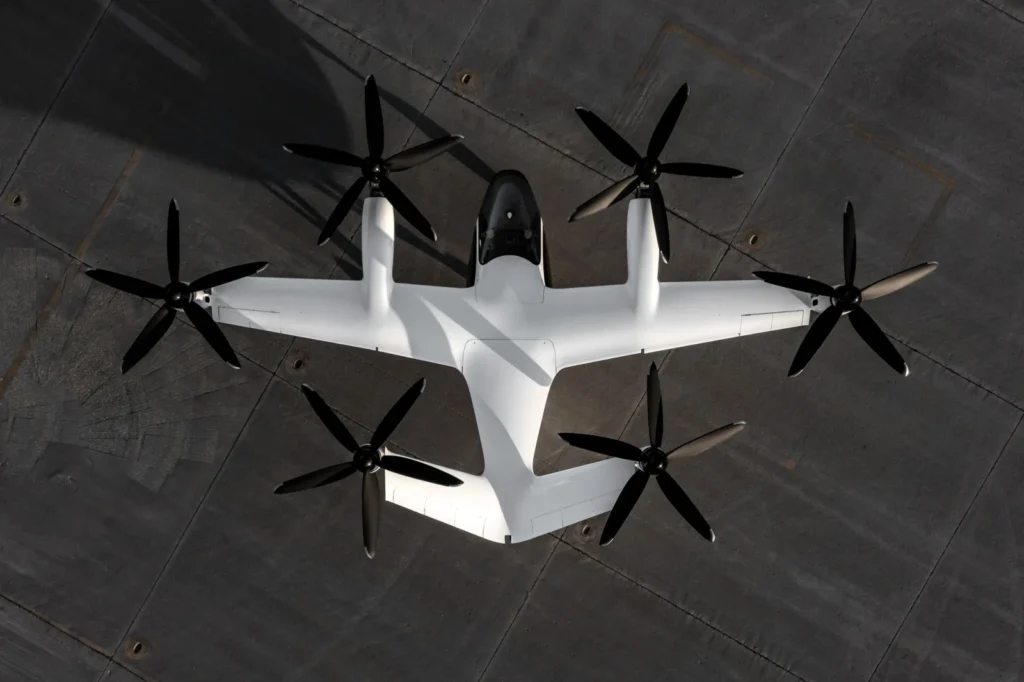
From a systems engineering standpoint, the complexity of assembling a tilt-rotor eVTOL with carbon-fiber composites and high-density battery packs cannot be overstated. Joby’s decision to move manufacturing out of their California pilot line and into a dedicated industrial hub in Ohio signals that the “design-for-manufacturing” (DFM) phase is nearly complete. This move is essential for reducing the per-unit cost of the aircraft, which is currently estimated to be in the millions, down to a level that supports a sustainable $3-$4 per seat-mile pricing model for consumers.
The Toyota Alliance: Infusing Automotive Efficiency into Aerospace
The most significant competitive advantage Joby possesses in manufacturing is its deep partnership with Toyota Motor Corporation. Toyota is not just a passive investor; they are Joby’s largest external shareholder and a hands-on manufacturing consultant. Toyota engineers are currently working side-by-side with Joby’s team in California and Ohio to implement “The Toyota Way”—lean manufacturing principles, Just-In-Time (JIT) supply chain management, and rigorous quality control protocols. This collaboration is focused on automating the production of Joby’s proprietary electric motors and the complex actuation systems that manage the transition from vertical to horizontal flight.
By applying automotive-scale production logic to aerospace standards, Joby aims to achieve a level of manufacturing reliability and speed that has never been seen in the aviation industry. My projections indicate that with Toyota’s assistance, Joby can reduce its production cycle time by 30-40% compared to traditional aerospace incumbents like Cessna or Piper. This manufacturing “moat” is what will eventually allow Joby to dominate the market by out-producing competitors who lack a world-class industrial partner, ensuring that once certification is achieved, the physical supply of aircraft does not become a bottleneck for global expansion.
| Metric | Prototype Phase | Production Phase 1 (Dayton) | Full Scale Capacity |
|---|---|---|---|
| Production Rate | 1-2 Aircraft / Year | 2-4 Aircraft / Month | ~500 Aircraft / Year |
| Labor Hours | High (Manual) | Moderate (Toyota Lean) | Low (Automated SCM) |
| Unit Cost | $5M+ (Estimated) | $2.5M – $3M | Target $1.2M – $1.5M |
5. [Financial Analysis] The Calculus of Cash Burn and Capital Raising
Runway Analysis: Fueling the Flight to 2026 Commercialization
Joby Aviation’s financial architecture is a textbook example of high-stakes technology scaling. As of the end of Q3 2025, Joby maintained a robust liquidity position with approximately $978.1 million in cash and short-term investments. This was further bolstered by a strategic equity offering in October, which injected roughly $576 million in gross proceeds. From a systems engineering perspective, we must analyze the “burn rate”—the velocity at which capital is consumed to maintain R&D and certification momentum.
Currently, Joby’s quarterly cash burn fluctuates between $120 million and $150 million. This puts their “cash runway” comfortably into late 2027, providing a significant buffer for unforeseen regulatory hurdles. However, as the company transitions from Stage 4 testing to full-scale Part 135 operations, capital expenditures (CAPEX) for vertiport infrastructure and pilot training are expected to accelerate.
The Path to BEP: Revenue Guidelines for the 2026 Launch
For investors, 2026 marks the “Year of Revenue Genesis.” Initial top-line growth will be driven by two primary engines: government-contracted services via the eIPP and U.S. Air Force Agility Prime program, and the inaugural commercial flights in Dubai. My unit economics modeling suggests that Joby targets a revenue profile of over $2 million per aircraft annually once operations mature. To reach the Break-Even Point (BEP), Joby must optimize its manufacturing throughput to lower the bill of materials (BOM) through economies of scale—a task heavily supported by Toyota’s lean production expertise.
While recent convertible note issuances introduce potential dilution, they serve as a strategic hedge, ensuring that the company does not have to tap capital markets during periods of high volatility. In short, Joby possesses the strongest balance sheet in the eVTOL sector, providing the “financial lift” necessary to clear the final hurdles of certification.
| Indicator | Current (Feb 2026) | Forecast (YE 2026) | Risk Factor |
|---|---|---|---|
| Cash on Hand | ~$1.2B | ~$900M | High Burn Rate |
| Burn Rate (Qtr) | $140M – $160M | $180M+ | Scaling Expenses |
| Revenue Stream | Gov/DoD Service | Initial Commercial Fare | Launch Delay |
6. [Competitive Advantage] Comparative Analysis: Archer vs. Wisk vs. Joby
Flight Test Dominance: 50,000 Miles of Empirical Validation
The delta between Joby and its competitors is most visible in flight test data. Joby has surpassed 30,000 miles of total flight testing with its pre-production prototypes, a milestone that dwarfs Archer’s “Midnight” aircraft data. From an engineering standpoint, Joby’s use of six tilting rotors provides a superior lift-to-drag ratio during the critical “transition” phase of flight—where the aircraft moves from vertical takeoff to horizontal cruise. While Boeing-backed Wisk Aero pursues a “Level 5” autonomous-first strategy, the regulatory path for pilotless passenger flight is significantly longer and more opaque. Joby’s pragmatic “pilot-in-the-loop” approach ensures they will be the first to capture the early-adopter market share, establishing a brand dominance that will be difficult for latecomers to disrupt.
Acoustic Profile & BMS: The “Quiet” Moat of Urban Integration
The “Right to Operate” in dense urban environments like Manhattan or Dubai hinges on noise pollution and battery safety. NASA’s acoustic testing confirmed that Joby’s aircraft registers only 45.2 dBA during a 500m flyover—quieter than a typical office conversation. This allows Joby to utilize vertiports in residential zones where competitors might face noise-ordinance bans.
Furthermore, Joby’s proprietary Battery Management System (BMS) and high-density cells are designed for over 10,000 charge cycles, a critical metric for reducing the “Total Cost of Ownership” (TCO). While legal disputes with Archer regarding trade secrets remain a headline risk, Joby’s vertical integration—owning the design of the motors, inverters, and flight software—creates a technical moat that is fundamentally superior to competitors who rely on fragmented off-the-shelf components.
7. [Investment Conclusion] Risk Disclosure and Fair Value Estimation
DCF Valuation: Solving the Equation for 2030 EPS of $0.86
To determine the intrinsic value of Joby Aviation (JOBY), I utilized a Discounted Cash Flow (DCF) model tailored for long-cycle aerospace engineering. According to current analyst consensus for the 2026–2030 period, Joby is projected to reach an earnings inflection point by 2028, with a forecasted EPS of $0.86 by 2030. Utilizing a conservative terminal P/E multiple of 25x–30x—standard for high-growth aerospace firms—this 2030 earnings profile suggests a future target price of $21.50 to $25.80.
When discounted back to 2026 values at a 12.5% rate (accounting for the high-beta nature of the eVTOL sector), my immediate price target shifts to the $13.00 – $15.00 range. This represents significant upside from current historical lows, contingent upon the Dayton facility successfully ramping to its target of 500 aircraft per year and maintaining a revenue CAGR exceeding 50%.
Systemic Risks and Portfolio Management Strategy
Despite the engineering brilliance, investors must navigate three “Critical-Path” risks that could derail the bull case. First, Regulatory Bottlenecks: Any friction in the FAA’s Stage 5 (TIA) testing would delay commercial revenue, leading to further capital raises and shareholder dilution. Second, Infrastructure Lag: The aircraft may be ready before the “Vertiports.” Without a dense network of landing pads and high-speed megawatt charging stations, the utility of the service remains localized and sub-scale. Third, Operational Black Swans: In the aerospace industry, a single safety incident during the early adoption phase can lead to a permanent loss of public trust and regulatory grounding.
Final Investment Verdict:
Joby Aviation is the definitive “pure-play” leader in the UAM revolution, backed by Toyota’s manufacturing prowess and Delta’s customer network. However, given the binary nature of aerospace certification and the high capital intensity, this remains a speculative venture. For those seeking exposure to the future of flight, maintain your position within 5% of your total portfolio to mitigate downside volatility while capturing the parabolic upside of a successful 2026 launch.
[Further Reading]
- FAA ‘Innovate28’ Operational Concept – The federal blueprint for air taxi integration.
- Joby Investor Relations: 2025 Annual Review – Detailed breakdown of the $1B capital raise.
- Toyota & Joby Strategic Alliance Whitepaper – Engineering insights into the Dayton manufacturing plant.